
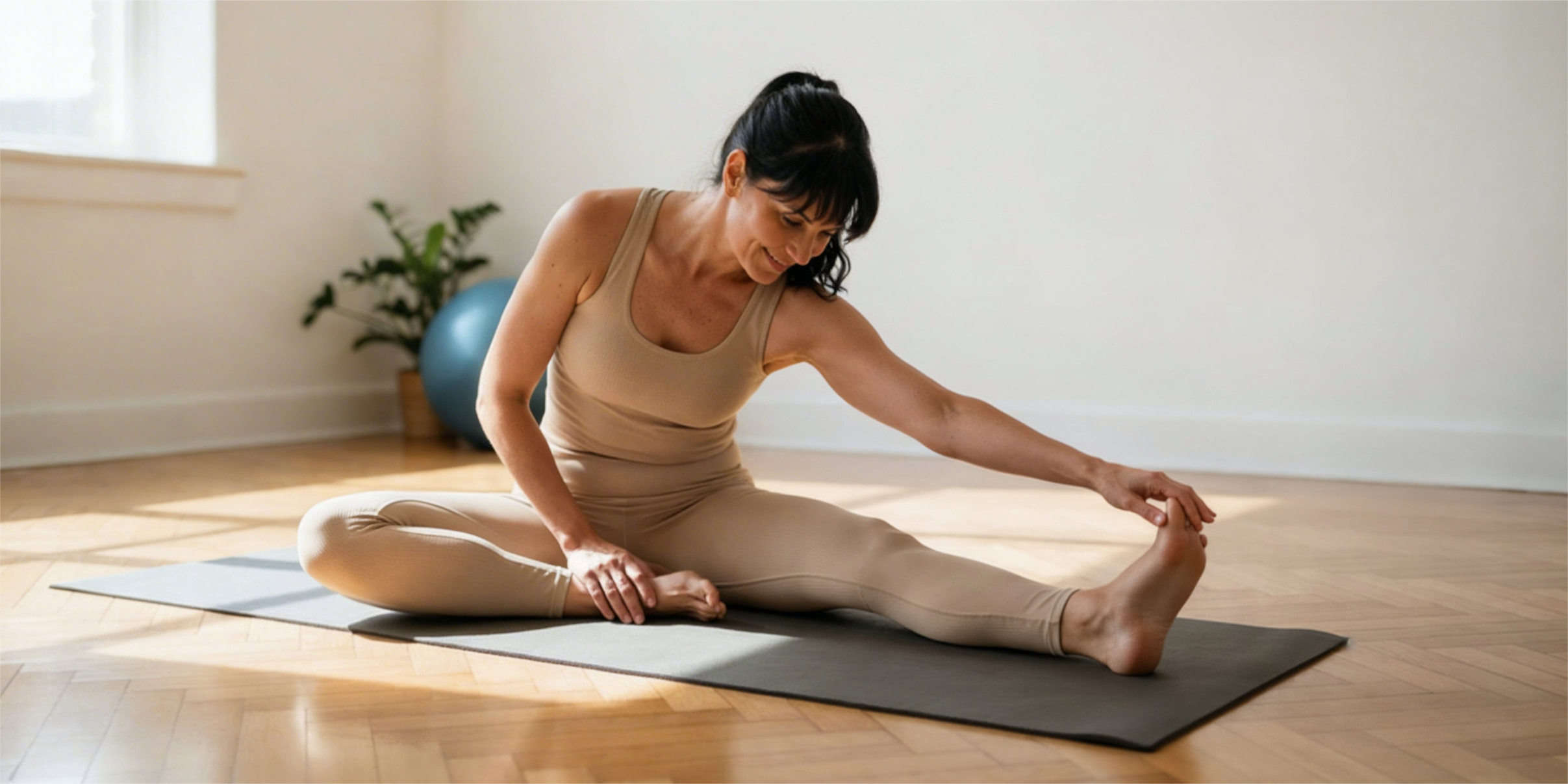
You can start your fitness journey (including full-body stretching exercises) at any age. Some might have started early on and then gotten back to it after a long hiatus. Some might have had a health scare and want to reclaim their health. When you start working out after 40, your body is not the same as it was in your younger days. The muscles naturally lose flexibility, and joint stiffness is real.
Full-body stretching exercises improve blood circulation. They help improve your ease of movement in daily activities. Stretching exercises reduce the risk of injury in daily activities. They help maintain mobility. With improved mobility, you can maintain your independence. Back discomfort and posture issues are concerns after 40. Full-body stretching exercises improve posture and reduce back discomfort. They support balance and coordination.
If getting out of bed sounds like popcorn popping or tying shoelaces is an Olympic event, this blog is for you.
Safety Tips Before Starting Stretching
Before performing any form of exercise, consult a doctor if you have any chronic pain or injuries. Inform your trainer about any injuries (existing or past). A private fitness trainer can design full-body stretching exercises around your pain or injury.
Don’t try to be an overachiever when you start. There are no medals to be won if you can touch your toes on day one. You do not have to compete with your younger self. You may have been able to bend more when you were younger, but in your 40s, you need to warm up lightly before stretching.
Stretch slowly and gently, and avoid any bouncy movements. Wear comfortable clothing when you stretch. Don’t let the limitations of fabric restrict your movements. Full-body stretching exercises have to be performed on a safe, non-slip surface. If, in the course of the session, you feel any sharp pain, stop immediately.
It is always advisable to hydrate well before and after stretching.
Best Warm-Up Movements Before Stretching
When you start stretching, there must be popping sounds of joints cracking. Call it “background music” and carry on. What are the light warm-up stretching exercises to do before full-body stretching exercises?
All the joints of the body have to be activated. Start with your shoulders. Roll the shoulders and loosen upper body tension. A simple, gentle march increases circulation. Arm swings are good for preparing the shoulder joints for the workout.
Hip circles can improve mobility. Light walking is recommended to warm the muscles. Knee lifts prepare leg muscles, and ankle rotations support balance.
Neck and Shoulder Stretches for Tension Relief
Stress sits rent-free on your shoulders. The first series of stretching usually involves the neck and shoulders. Side neck stretches reduce neck stiffness. A few shoulder shrugs release tension. Stretching the arms across the body improves shoulder mobility. Upper back stretches can help reduce the strain of incorrect posture. Chest-opening stretches also improve posture.
Gentle neck rotations can undo the damage of years of looking down at your phone. They increase neck flexibility. Exercises that squeeze the shoulder blades can help fix alignment issues. Controlled breathing while stretching can relax your body and mind.
Upper Back and Chest Opening Stretches
Working at a desk all day can cause upper and lower back pain. Your spine will probably be begging for mercy. This can compromise shoulder alignment and cause rounded shoulders. Stretches for the upper back and chest reduce upper back pain. Stretching these areas improves spinal mobility as well.
Upper back and chest opening stretches improve breathing capacity. It facilitates deeper breathing as the chest muscles open up. These stretches support better posture and enhance upper body mobility. Your spine will thank you for these stretches.
Lower Back and Core Stretching Exercises
Lower back pain is very common. One of the simpler moves in yoga is the cat-cow movement. It helps increase flexibility and promote mobility throughout the entire spine. It alleviates back pain by stretching the back muscles and neck muscles.
Knee-to-chest stretch relieves lower back pain and reduces muscle tension. It improves the mobility of the hips and spine. Pelvic tilts are foundational exercises designed to strengthen the core and reduce lower back pain. Gentle twists improve mobility. Back pain can be improved with a stronger core. Activating the core before working on it reduces back strain.
Full-body stretching exercises can make daily life movements easier. They make bending and lifting things easier and painless. They help with balance and stability.
Hip and Glute Stretching for Mobility
These stretches can help reduce stiffness from sitting for long periods. Full-body stretching exercises, when practiced daily, improve walking comfort and enhance lower-body mobility. It helps with balance and stability.
Begin with seated or lying glute stretches. Place one ankle over the opposite knee and gently pull the leg toward the chest. Hip flexor stretches done in the low lunge position can loosen tight hips. Standing hip circles and gentle lunges help loosen them further. These movements balance the pressure on the lower back and knees. This helps you walk comfortably and improves posture.
Regular hip stretches enhance balance and reduce the risk of falls. In the long run, it improves your balance, stability, and confidence in daily activities.
Leg and Hamstring Stretches for Flexibility
The legs and hamstrings can be tight for people who strength-train regularly. Tight legs and hamstrings can make daily activities like bending, walking, or climbing stairs feel hard. Stretching these muscles improves flexibility. This eases your movements throughout the day.
Simple stretches like seated hamstring stretches help loosen tight muscles behind the thigh. You extend one leg and gently lean the upper body towards it to perform this stretch. Standing quad stretches, where you stretch your leg behind you and pull your foot towards the body, stretch the quads. Calf stretches and gentle forward bends also improve circulation and muscle elasticity.
If touching your toes feels like a distant reality today, don’t worry. Practicing full-body stretching exercises regularly improves flexibility gradually. Today reach for the knees, tomorrow the shins, and one day your toes will finally meet you halfway.
Ankle and Calf Stretches for Balance Support
Strong and flexible ankles and calves are important in maintaining balance and stability, especially after 40. Weak ankles increase the risk of slips and falls. Basic calf stretches can be performed by placing the toes on a block or against a wall and leaning your weight towards the raised toes. This stretch helps lengthen the muscles.
Ankle rotations, toe lifts, and heel raises work the ankles and improve joint mobility and circulation. Improved ankle flexibility enhances balance, making daily life tasks easier and safer. People who experience calf cramps can find relief with these stretches. Stretching also reduces fatigue during longer walks.
Building a Daily Stretching Habit After 40
The biggest challenge with full-body stretching exercises isn’t learning the exercises. It’s making them a regular habit. After 40, consistency matters more than intensity. A short daily routine makes much more of a difference than occasional long sessions.
Start with five or ten minutes a day and gradually increase the duration as stretching feels easier. The easiest way to make it a habit is to link it to other daily activities. You can make it a routine after waking up or before bedtime. This helps build consistency. You could make it enjoyable too by doing it while watching television or listening to music.
If you are looking for fitness trainers who specialize in full-body stretching exercises in and around California, visit Paragon Body today. Train with our fitness experts and feel 20 again!